When the time comes to hire a probate attorney, it's important to understand exactly what you're paying for and what costs you can expect throughout the probate process.
Every state has its own laws governing probate, including how attorneys are compensated. This article focuses specifically on California probate law, where attorney compensation for ordinary probate services is set by statute rather than negotiated on an hourly basis in most cases.
California's Statutory Probate Attorney Fees
California Probate Code establishes the following fee schedule based on the gross value of the probate estate:
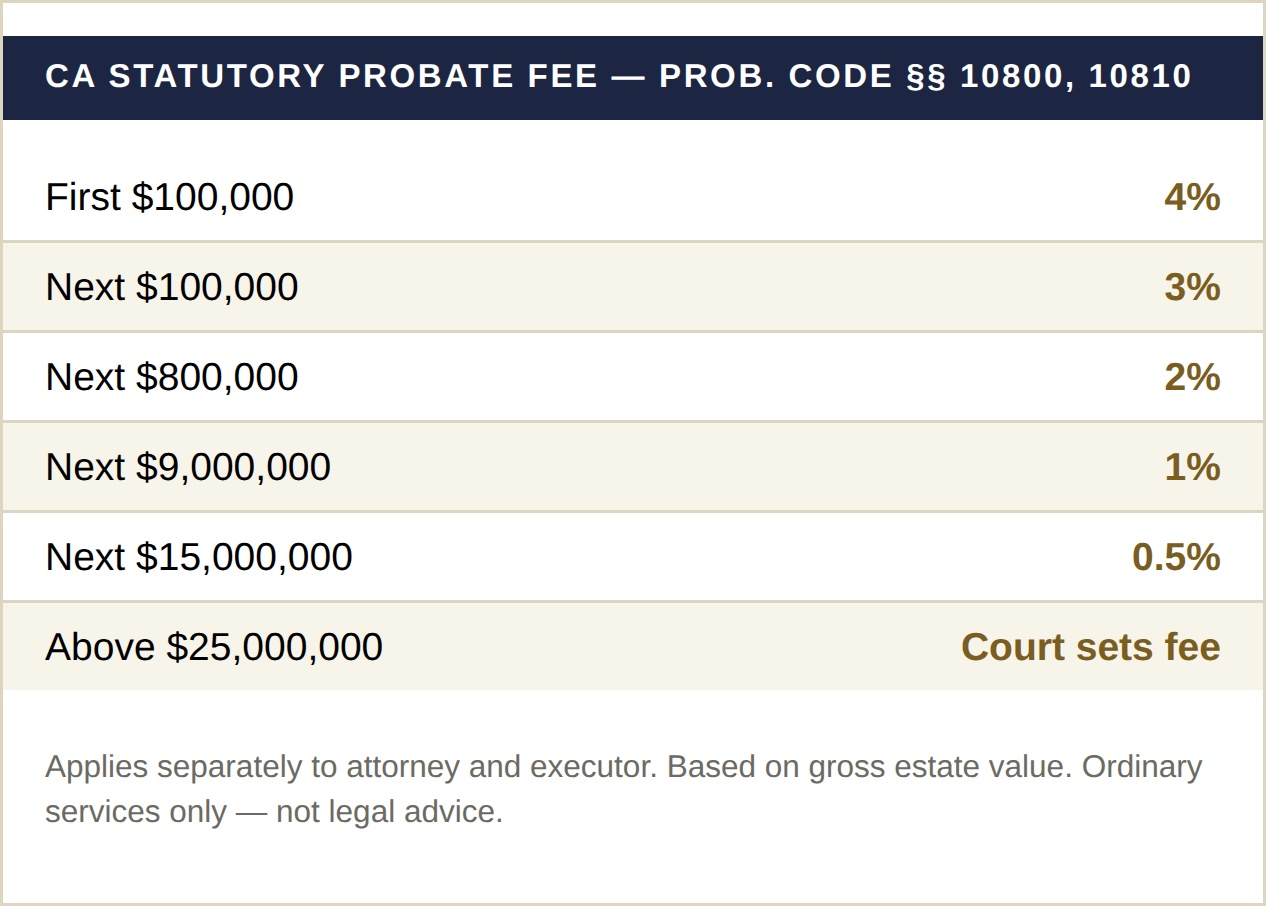
It's important to remember that these fees are calculated using the gross value of the probate estate, meaning debts such as mortgages are generally not deducted when calculating attorney compensation.
Other Probate Costs to Expect
Attorney fees are only one part of the overall cost of probate. Most estates will also incur several administrative expenses, including:
- Court filing fees. The initial petition filing fee is typically around $435, although fees can vary depending on the court and the type of filing.
- Probate referee fees. The court appoints a probate referee to determine the value of non-cash assets such as real estate, vehicles, business interests, and certain investments. Their fee is generally 0.1% of the appraised value of these assets, subject to statutory minimums and maximums.
- Publication fees. California law requires notice of the probate proceeding to be published in a local newspaper. These fees typically range from $200 to $1,000, depending on the county and the newspaper used. This publication helps notify creditors and other interested parties that probate has been opened.
- Certified copies and miscellaneous court costs. Certified copies of court orders and other documents generally cost around $15 to $25 each.
- Probate bond premiums (when required). Some personal representatives must obtain a probate bond, which is an insurance policy that protects the estate if the representative mishandles estate assets. The cost varies based on the size of the estate, and the premium is generally paid by the estate.
Who Pays These Costs?
The good news is that these expenses are typically paid by the estate, not by you personally. In most probate cases, attorney fees, court costs, publication fees, and other administrative expenses are reimbursed from estate assets before distributions are made to beneficiaries.
Similarly, the decedent's debts are generally paid from estate assets. If there isn't enough money in the estate to pay all valid debts, the estate may be considered insolvent. In that situation, creditors are paid according to California's statutory priority rules, and unpaid debts are often written off. Beneficiaries and family members are generally not personally responsible for those debts unless they were a co-signer, joint account holder, or otherwise legally obligated to pay them.
Final Thoughts
While probate can involve several different fees, understanding them ahead of time can help you plan and avoid surprises. Every estate is unique, so the total cost will depend on the value of the estate, the complexity of the administration, whether a probate bond is required, and whether any disputes arise during the process.
To avoid the time, expense, and stress of probate, it's never too early to start planning for the future. Attorney Jessica Ward is here to answer your questions about this important planning.
If you are preparing to open a probate case, the Law Office of Jessica R. Ward is here to guide you through every step of the process with knowledgeable and compassionate legal counsel. To schedule a consultation, contact the Law Office of Jessica R. Ward at (925) 459-1777, or book a 15-minute Discovery Call.